 Bowser Electric
An MCB that trips repeatedly can feel confusing, especially when every appliance is switched off. Many homeowners ask, “why does my mcb keep tripping without load?” The answer may involve more than visible appliances. Hidden wiring faults, damaged insulation, loose terminals, or a defective breaker can still create abnormal current conditions. A disconnected load does not always mean a fault-free circuit.
A careful inspection begins at the consumer unit and continues toward the circuit outlets. Look for heat marks, burning smells, cracked cable insulation, and unusual buzzing. These details can reveal problems before testing begins. A qualified electrician should isolate the circuit and use suitable test equipment, such as an insulation resistance tester and a continuity tester. Do not repeatedly reset the MCB. That can worsen a loose connection or concealed cable fault.
Sometimes, the breaker itself has weakened after years of thermal stress. A neutral-to-earth fault may also confuse the diagnosis, although its behavior differs from a standard overload. This distinction matters. An RCD may trip for leakage, while an MCB usually responds to overcurrent or short circuits. The exact protective device must be identified first.
Diagnosis is not always obvious. Even experienced technicians can misjudge an intermittent fault. I have seen “no-load” circuits trip only when a cable warmed inside a wall. That possibility deserves attention. This guide explains practical checks, common causes, and safer repair decisions without encouraging risky trial and error. If the breaker trips immediately, smells hot, or shows visible damage, stop testing and contact a licensed electrician.
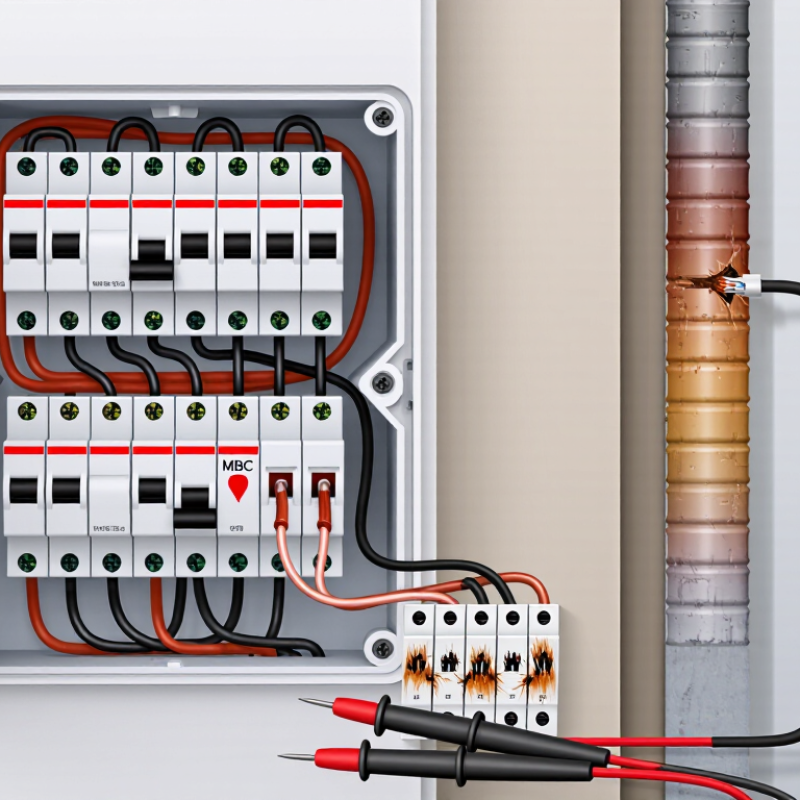
How to Fix an MCB That Keeps Tripping Without Load?
An MCB can trip even when every appliance appears switched off. The wiring itself may still contain a fault. A damaged cable behind a wall can create an intermittent short circuit. Moisture near a socket or junction box can also increase current flow. It may happen after cleaning, rain, or condensation. Small faults can be difficult to notice.
Heat is another possible cause. A loose terminal may warm the breaker during earlier use, causing a delayed trip. The breaker might then trip again after resetting, even with no appliance connected. In some cases, the device is not a standard MCB. It may be an RCBO or another protective device that reacts to leakage current. Check for a test button, but do not rely on appearance alone.
Turn off the branch circuits, unplug visible appliances, and reset the MCB once. Restore circuits individually. Stop if the breaker trips immediately. Do not keep forcing it back on. Repeated resets can worsen damaged wiring and create dangerous heat. A qualified electrician can test insulation resistance, cable continuity, terminal tightness, and the breaker’s operating curve. I have found that “no load” often means “no obvious load,” not a fault-free circuit. That distinction matters. Never remove the panel cover unless you are trained and authorized to work safely inside it.
Hidden loads may still be energized. Fixed heaters, loft fans, pumps, and outdoor circuits can remain connected. The panel may look quiet. That proves little.
Switch off every branch circuit. Unplug visible appliances, chargers, heaters, pumps, and extension leads. Do not rely only on wall switches. Fixed equipment may remain live.
Restore each circuit separately. Wait several minutes after each change. Note which circuit causes another trip. Careful notes beat guessing.
It may indicate a faulty breaker, damaged cable, panel connection, or hidden fault. Stop resetting it. Arrange testing by a licensed electrician.
No, unless you are qualified and authorized. Live parts can cause severe injury. Keep the cover closed. Safety matters more than curiosity.
A qualified electrician begins with visual inspection. They may perform continuity and insulation-resistance tests on an isolated circuit. Calibrated equipment is needed for trip-current and timing tests.
Watch for burning smells, buzzing, unusual heat, cracking, discoloration, or brown terminals. These signs need prompt attention. Do not keep resetting the breaker.
Replacement may be needed if it fails testing, will not reset, trips below its rating, or shows damage. Do not install a higher-rated breaker. The cable could overheat first.
Not necessarily. A replacement can hide damaged insulation or another wiring fault. That is not a real repair. Testing should identify the cause before power is restored.
An MCB that trips even when no obvious appliance is running may indicate a hidden load, a wiring fault, moisture, insulation damage, or a problem within the breaker itself. If you are wondering, “why does my mcb keep tripping without load,” begin by switching off all branch circuits and unplugging connected equipment. Restore circuits one at a time to identify whether a particular section causes the trip. Check for overlooked devices, outdoor connections, damaged cables, loose terminals, burning smells, or signs of dampness. Do not remove protective covers or touch exposed conductors unless you are qualified to do so.
If every circuit is isolated but the MCB still trips, the breaker may be faulty or the supply wiring may require professional testing. A qualified electrician can use appropriate test equipment to check insulation resistance, short circuits, earth faults, and the breaker’s operating condition. Replace the MCB only with a correctly rated equivalent after the underlying cause has been confirmed. Restore power gradually, keep connections dry and secure, and arrange a professional inspection if repeated tripping continues.
